
Dez Passos: Rumo a uma Cidade Neutra em Carbono
Dez Passos: Rumo a uma Cidade Neutra em Carbono
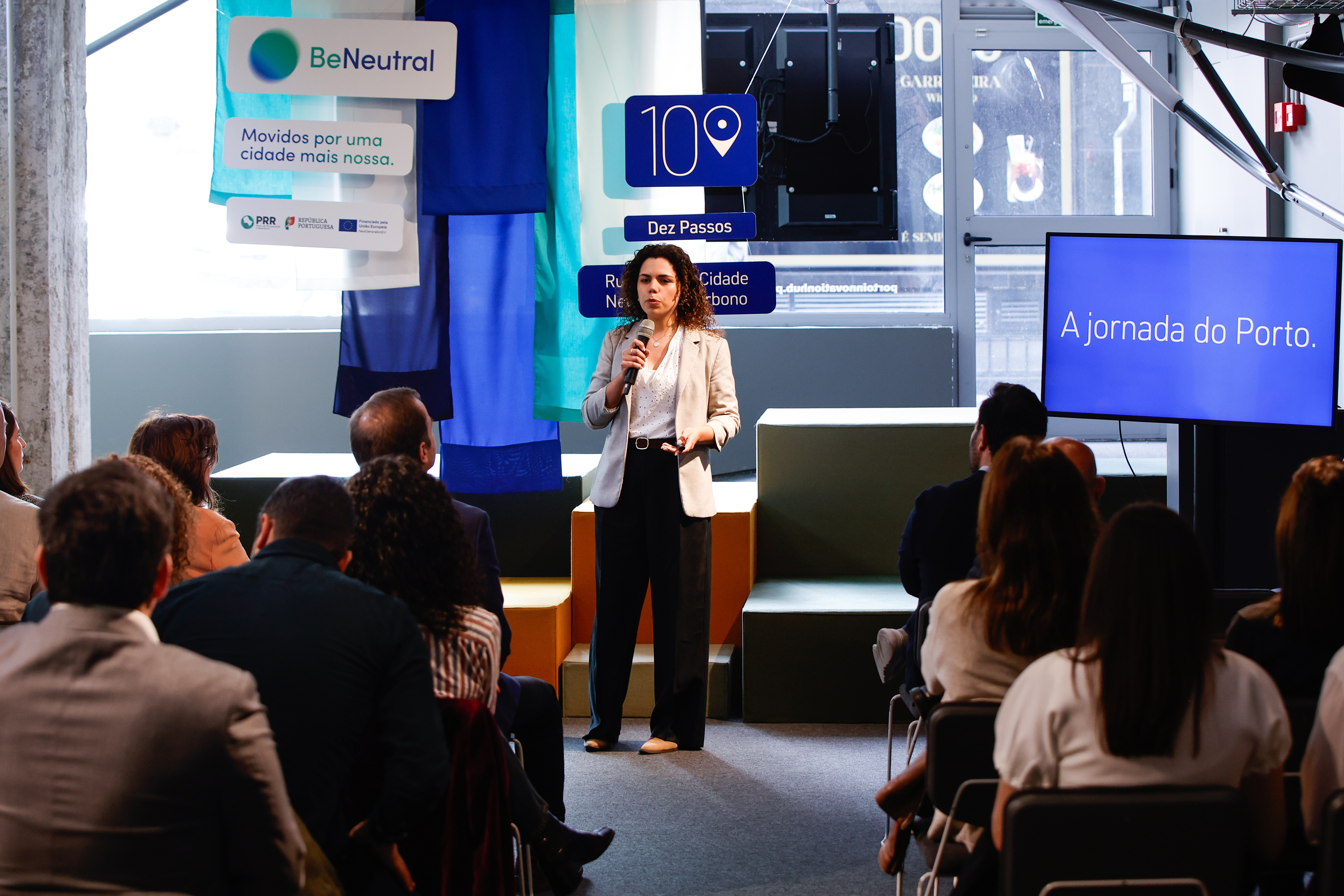
Porto abre caminho rumo à neutralidade carbónica no evento “Dez Passos: Rumo a uma Cidade Neutra em Carbono” no âmbito do projeto Be.Neutral.
O Porto reafirmou o seu papel na transição climática ao acolher, no Porto Innovation Hub, o evento “Dez Passos: Rumo a uma Cidade Neutra em Carbono”. A iniciativa decorreu no âmbito do projeto Be.Neutral, cujo objetivo é acelerar a descarbonização urbana através da colaboração entre municípios, empresas e entidades científicas do Norte de Portugal.
O consórcio Be.Neutral integra oito cidades - Porto, Matosinhos, Vila Nova de Gaia, Braga, Guimarães, Vila Nova de Famalicão, Viana do Castelo e Oliveira de Azeméis, que partilham conhecimento sobre diferentes processos e abordagens no caminho para a Neutralidade Carbónica 2030.
Entre os momentos mais relevantes do evento, foi apresentado o Plano de Referência para a Descarbonização da Cidade do Porto, que consolida políticas, projetos e mecanismos de coordenação que poderão servir de modelo para outras cidades envolvidas. Este plano traduz uma abordagem integrada para a redução de emissões e envolvimento ativo da comunidade na transição climática.
O evento “Dez Passos: Rumo a uma Cidade Neutra em Carbono”, contou ainda com uma mesa-redonda sobre boas práticas na descarbonização, moderada por Adeeb Sidani da Porto Digital, com intervenções de Bernardo Ribeiro (CEiiA), Helder Costa (Porto Ambiente), Rui Pimenta (Agência de Energia do Porto) e Fernando Rocha (Águas e Energia do Porto). A sessão destacou a importância da cooperação intermunicipal, da partilha de conhecimento técnico e das boas práticas entre as equipas municipais.
Um dos temas relevantes foi a apresentação do booklet “10 Passos: Rumo a uma Cidade Neutra em Carbono”, que sistematiza o plano de referência para a descarbonização.
O projeto Be.Neutral, no âmbito do PRR, prevê reduzir 600 mil toneladas de CO₂ até 2030, contribuindo para cidades mais sustentáveis e gerando uma poupança estimada de 60 milhões de euros através de maior eficiência energética e menor consumo de recursos.